
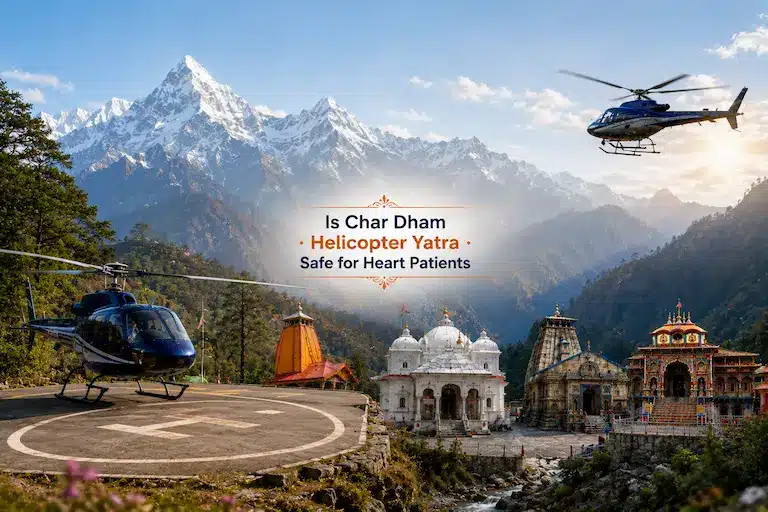
For many families, the biggest worry before booking a Char Dham Yatra is not the cost or the itinerary, it is whether a loved one with a heart condition can safely make the journey. The good news is that helicopter travel has made the pilgrimage far more accessible for heart patients than the traditional road route ever was. But accessible does not automatically mean risk free, and understanding the real factors involved is essential before you book.
This guide looks at whether Char Dham helicopter yatra is safe for heart patients, what the actual risks are, and what precautions can help make the journey as safe as possible. Please note that this article is for general information only and is not a substitute for advice from your cardiologist.
Why Heart Patients Consider the Helicopter Option
The Char Dham shrines, Yamunotri, Gangotri, Kedarnath, and Badrinath, sit at altitudes ranging from roughly 3,000 to 3,600 meters above sea level. On the traditional road route, reaching these shrines involves long drives on winding mountain roads, extended waiting in queues, and in the case of Kedarnath, a steep trek of 16 to 18 kilometers. For anyone with a heart condition, this level of physical exertion at high altitude can be genuinely risky.
The helicopter yatra removes most of this physical strain. Instead of trekking for hours, pilgrims fly directly to helipads near each shrine and walk only a short distance to reach the temple. VIP darshan arrangements also reduce the time spent standing in long queues. This is why many doctors and families view the helicopter option as the safer and more practical choice for heart patients, provided the person is medically cleared to travel.
The Altitude Factor That Does Not Go Away
While the helicopter eliminates the physical exertion of trekking, it does not eliminate the effects of high altitude. This is the part many families overlook. Whether you reach Kedarnath by foot or by helicopter, you are still exposed to the same reduced oxygen levels once you arrive.
At elevations above 3,000 meters, the air contains less oxygen, a condition sometimes referred to as hypobaric hypoxia. This means the heart has to work harder to circulate oxygenated blood through the body. For a healthy individual, this extra effort is usually manageable and temporary. For someone with an existing cardiac condition, this added workload can bring on symptoms like breathlessness, fatigue, chest discomfort, or irregular heartbeat, sometimes earlier and more intensely than a healthy person would experience.
Cold temperatures at these altitudes add another layer of strain, since cold weather can cause blood vessels to constrict, which may further affect heart function. Combined with travel fatigue and the possibility of dehydration, these factors together can place real stress on the cardiovascular system, even when the physical trekking has been removed from the equation.
What Uttarakhand’s Health Guidelines Say
Given the health risks associated with high altitude pilgrimage, Uttarakhand authorities have introduced stricter medical protocols for the current yatra season. All pilgrims are now required to undergo a physical medical check-up before beginning their journey, and this is compulsory for pilgrims above the age of 55 or anyone with a history of heart disease, hypertension, asthma, or diabetes. Multiple health check-up centres and medical relief posts have been set up along the main routes to support this screening process, and pilgrims may need to present a fitness certificate or undergo an on-the-spot check before being allowed to proceed.
Medical advisories from health authorities in the region note that pilgrims may experience altitude related symptoms such as headache, nausea, dizziness, breathlessness, and fatigue, particularly during the first 24 to 48 hours at elevation. These guidelines apply equally whether you are traveling by road or by helicopter, since the altitude exposure itself does not change based on how you arrive.
Precautions Every Heart Patient Should Take
If a heart patient wants to attempt the Char Dham Yatra by helicopter, careful preparation makes a significant difference to safety and comfort.
Consult your cardiologist before booking, not after. A proper cardiac evaluation should confirm whether high altitude travel is safe for your specific condition, and your doctor may recommend adjustments to your medication or specific precautions for the trip.
Carry all prescribed medications in sufficient quantity, along with a written list of your conditions and dosages. It can also help to carry a small supply of emergency medication for chest pain or blood pressure spikes, as advised by your doctor.
Choose a relaxed itinerary rather than trying to rush through all four shrines in the shortest possible time. A standard five night, six day helicopter package is generally a better choice than a compressed one day plan, since it allows the body more time to adjust between locations.
Stay hydrated and eat light, easily digestible meals throughout the journey. Avoid heavy, spicy food, alcohol, and smoking, all of which can add unnecessary strain during altitude exposure.
Move slowly after landing at each helipad and avoid rushing up any inclines or stairs. Taking your time, even for short distances, reduces sudden strain on the heart.
Ensure your travel insurance policy specifically covers pre-existing heart conditions and emergency evacuation. Some standard travel insurance policies exclude high altitude emergencies or cardiac events entirely, so it is worth reading the policy details carefully before you travel.
Warning Signs to Watch For
Even with preparation, it is important for heart patients and their families to know the warning signs that mean the journey should be paused immediately. These include chest pain or tightness, severe or worsening breathlessness, dizziness or fainting, an irregular or rapid heartbeat, or unusual confusion.
If any of these symptoms appear, do not try to push through or self-medicate. Seek medical help immediately by contacting local emergency services, and if possible, move to a lower altitude, since descent is often the first and most effective response to altitude related cardiac distress. Keep your medical documents and emergency contact details on you at all times, and make sure your travel companions and tour operator are aware of your condition from the start of the trip.
When the Yatra May Not Be Advisable
Not every heart condition is compatible with high altitude travel, even by helicopter. If your cardiologist advises against travel to high altitude locations, it is important to respect that guidance rather than proceeding based on spiritual motivation alone. The shrines will remain open in future seasons, but a serious cardiac event at high altitude, far from advanced medical facilities, carries real risk. An honest conversation with your doctor about your specific condition is the only reliable way to know whether the journey is safe for you.
Final Thoughts
For most heart patients with a stable condition and proper medical clearance, the Char Dham Yatra by helicopter offers a genuinely safer and more manageable way to complete this sacred pilgrimage compared to the traditional road route. Reduced physical exertion, shorter time at altitude, and organized medical support along the route all work in your favor. But altitude itself remains a real factor that no amount of comfort can fully remove, which is why medical clearance, careful planning, and honest self-assessment matter just as much as the mode of travel you choose.
At YatraKey, we understand that every pilgrim’s situation is different. Our team helps families plan helicopter Char Dham Yatra packages with realistic itineraries, proper rest days, and guidance on the precautions that matter most for pilgrims with health conditions, so that your journey stays focused on devotion rather than worry.
Planning a Char Dham Yatra for yourself or a loved one with a heart condition? Contact YatraKey today to discuss a helicopter package designed around your health needs and travel comfortably with the right support at every step.
Frequently Asked Questions: Is Char Dham Helicopter Yatra Safe for Heart Patients?
Is Char Dham helicopter yatra completely safe for heart patients?
It is generally considered safer than the road route since it removes most physical exertion, but it is not automatically risk free. Safety depends on the individual’s specific heart condition, medical clearance from a cardiologist, and proper precautions taken during the trip.
Do heart patients need a medical certificate for Char Dham Yatra by helicopter?
Under current health guidelines, a medical check-up is compulsory for pilgrims above the age of 55 or those with a history of heart disease, hypertension, asthma, or diabetes. It is strongly recommended for all heart patients regardless of age.
Does altitude still affect heart patients even when traveling by helicopter?
Yes, altitude effects remain the same regardless of how you reach the shrine. Reduced oxygen levels at elevations above 3,000 meters can strain the heart even without physical trekking involved.
What should heart patients carry during the Char Dham helicopter yatra?
Heart patients should carry all prescribed medications in sufficient quantity, a written record of their medical history, emergency contact details, and travel insurance that covers pre-existing heart conditions and emergency evacuation.
Can YatraKey help plan a Char Dham helicopter trip for heart patients?
Yes, YatraKey assists in planning relaxed helicopter itineraries with adequate rest days and guidance on medical precautions, helping heart patients and their families travel with greater confidence and safety.